Handsets, cabling, PoE - and the bandwidth math nobody should fear
The seat price covers the software; the building covers the rest. What a Epes office actually needs - and the honest answer on whether your internet is already enough (it almost certainly is) - is below.
Two free marketplace paths: one form brings back multiple vetted providers who know they are competing for the job.
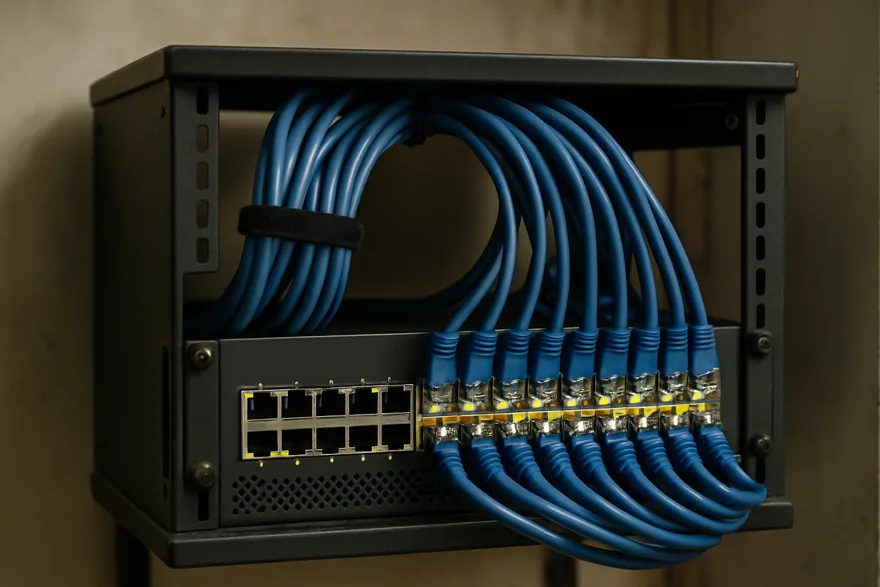
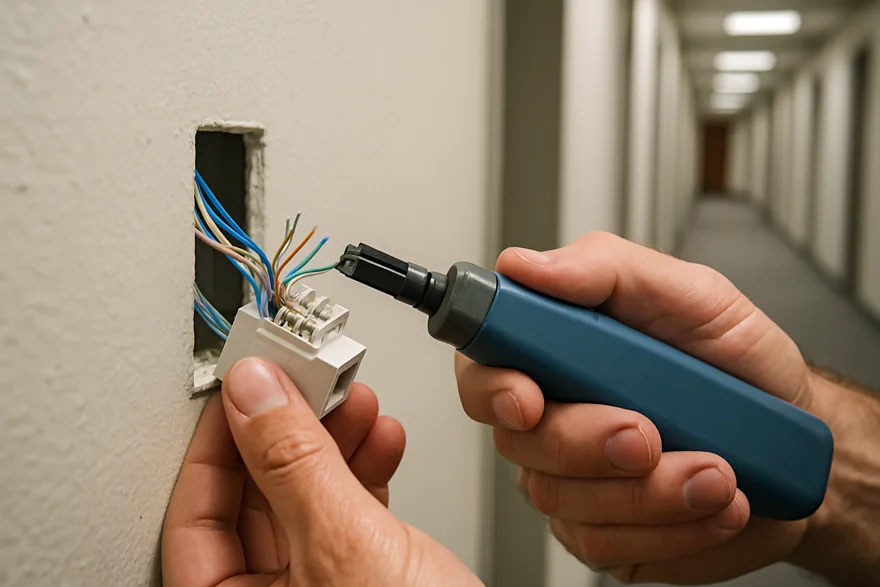
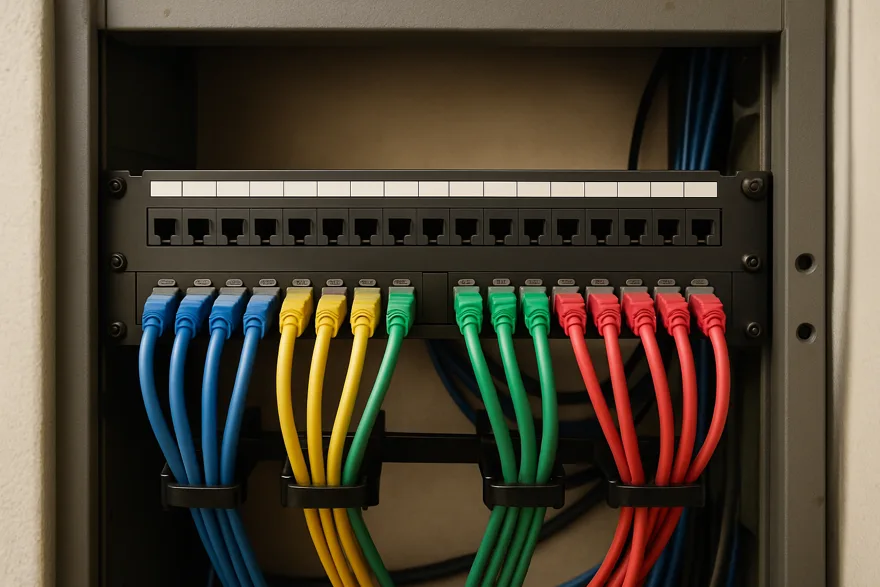
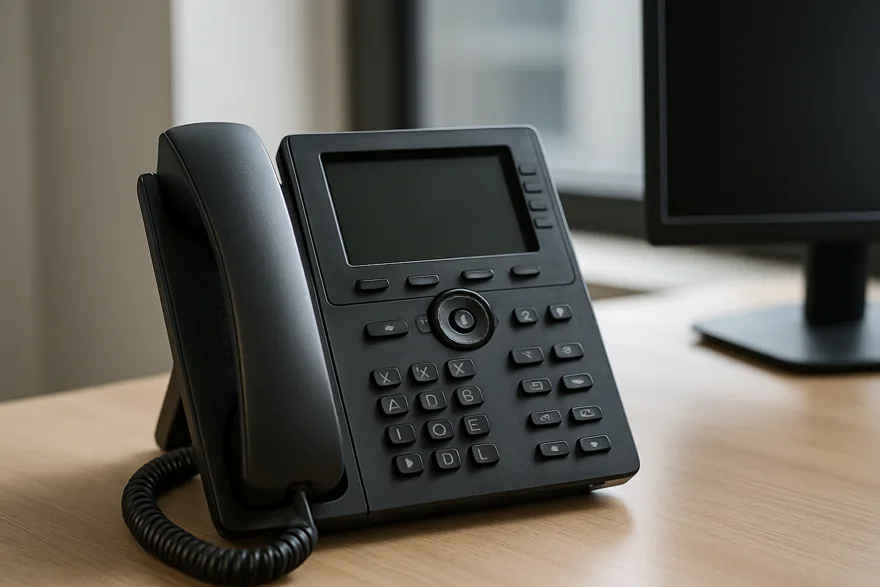
Outfitting a Epes office adds real hardware lines the seat price skips: desk phones at $55-$280 each, cabling drops at $125-$400 installed, and a PoE switch from $70 to power them.
Business VoIP seats quoted to Epes offices run $15-$30 per user per month at entry tier and $25-$50 at mid tier in 2026 vendor list prices - with annual billing 20-50% cheaper than month-to-month for the same seat.
Median household income in Epes's county (Sumter County) is $36,855 per Census SAIPE 2024 - the local economy every telecom rep in the area prices against.
'No upfront cost' cloud phone plans still have an upfront cost if your building lacks wired Ethernet and PoE power at every desk: handsets, cabling drops and a powered switch are real capital lines the seat price never mentions.
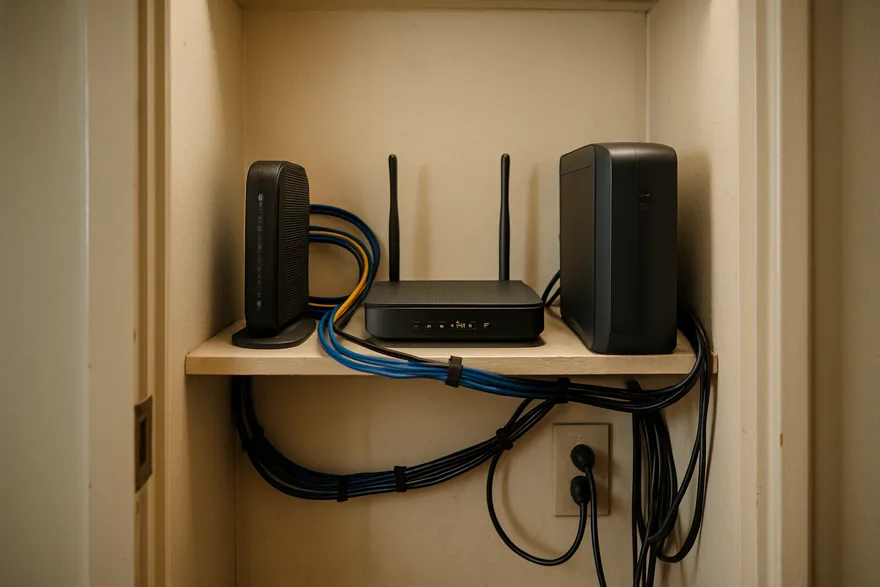
The bandwidth question is the most over-sold fear in this industry: a normal office broadband connection carries dozens of simultaneous calls with room to spare. The honest sizing math is below - as a checkable curiosity, not a reason to upgrade your internet.
The 2026 numbers
| Phone system category | 2026 published range | The number that actually matters |
|---|---|---|
| Cloud VoIP seat (entry tier) | $15-$30/user/month | Annual billing runs 20-50% cheaper than monthly for the same tier |
| Cloud VoIP seat (mid tier) | $25-$50/user/month | Compare the all-in total with taxes and fees - commonly 20-30% on top |
| Contract term | 12-36 months typical (up to 84) | Miss the 30-90 day notice window and many contracts renew a full term |
| Taxes and fees on the bill | commonly 20-30% of the total | Federal USF (38.8% of interstate charges, Q3 2026) and state 911 fees are government-set; 'recovery' fees are carrier-invented |
| SIP trunking (keep your PBX) | $15-$30/channel/month | Priced per concurrent call, not per user - fits businesses keeping a PBX |
| Desk phones and wiring | $55-$280/phone; $125-$400/cabling drop | 'No upfront cost' plans still need handsets, drops and a PoE switch |
| Legacy analog lines (elevator, fire alarm, fax) | $30-$60/line/month cellular adapter | Copper holdout pricing runs $150-$500+/line - and standard VoIP fails those inspections |
Put a phone hardware quote out to competing bid before talking price
Two free marketplace paths: one form brings back multiple vetted providers who know they are competing for the job. Competing quotes are the only pricing discipline this industry consistently respects.
External links go to the marketplaces' own sites and forms. This site may earn a referral fee at no cost to you - it never changes the data above, and no individual provider pays to appear in our research.
The bandwidth math, as a curiosity
Each simultaneous call needs about 100 Kbps each way - ten concurrent calls fit in roughly 1 Mbps plus 20-30% headroom, a fraction of any modern business connection. Bandwidth matters for call-center concurrency or legacy DSL-class links, not for a normal Epes office; enabling QoS on the router, which prioritizes voice packets, costs nothing and prevents choppy calls on busy networks.
Uptime claims, translated
'Five nines' (99.999%) allows 5.26 minutes of downtime a year; 99.9% allows 8.76 hours - a 100x difference, and both are contractual targets rather than audited history. The likelier outage is local: internet or power failure takes cloud phones down regardless of the provider's data centers, unless cellular failover or call-forwarding is configured in advance.
What this means in Epes
The most expensive line in a phone contract is the one that renews itself: miss the written-notice window - commonly 30-90 days before term end - and many contracts renew for another full term, early-termination fee and all.
This page is independent research, not legal, tax or purchasing advice. Fee schedules, 911 surcharges and telecom rules are set by federal and state authorities and by individual contracts, and they change - verify current rates with your state and the full fee schedule with any provider before signing.
Common questions
How long are business phone contracts?
Twelve to thirty-six months is standard, with some contracts stretching to 84 months - and longer terms usually trade for lower monthly rates or 'free' hardware. The clause that matters more than the term is the renewal: many contracts renew automatically unless you give written notice inside a 30-90 day window, and a missed window can mean another full term with the early-termination fee reset.
What is a typical early termination fee?
The most common structure is every remaining month multiplied by the monthly fee - a 24-month contract at $150 a month cancelled after 6 months can mean a $2,700 exit bill - though some providers use flat fees around $295-$995 instead. Providers may also claw back 'free' hardware or installation credits. No regulator caps these terms for business lines; the contract is the whole ballgame.
Is the 'Regulatory Recovery Fee' a government fee?
No. Despite the official-sounding name, regulatory recovery and administrative recovery fees are set by the carrier, changeable by the carrier, and kept by the carrier - no law requires them or fixes their amount. The genuinely mandated lines are the federal USF contribution and state-imposed charges like your state's 911 surcharge. Ask any provider to split its fee schedule into 'government-mandated' and 'company-set' columns - the honest ones will.
Why is my phone bill higher than the quoted price?
Because the quote is the seat price and the bill adds two kinds of extras: genuine government charges - the federal Universal Service Fund contribution (38.8% of interstate charges in Q3 2026) and your state's 911 surcharge - and carrier-invented lines like 'Regulatory Recovery Fee' or 'Administrative Fee', which the provider sets at its own discretion and keeps. Together, taxes and fees commonly add 20-30% to the bill.
How much internet bandwidth does VoIP need?
About 100 Kbps per simultaneous call - so ten concurrent calls need roughly 1 Mbps each way plus 20-30% headroom, a fraction of any modern business broadband plan. For most offices this is a non-issue; it matters mainly for call-center-scale concurrency or offices still on legacy DSL-class connections. Enabling QoS on the router, which prioritizes voice packets, costs nothing and prevents choppy calls on busy networks.
Put a phone hardware quote out to competing bid before talking price
Two free marketplace paths: one form brings back multiple vetted providers who know they are competing for the job. Competing quotes are the only pricing discipline this industry consistently respects.
External links go to the marketplaces' own sites and forms. This site may earn a referral fee at no cost to you - it never changes the data above, and no individual provider pays to appear in our research.