Per-user tiers, the annual-billing gap, and cloud versus on-premise honestly
Seat prices are the most public numbers in telecom and the least complete: the same Galt office pays a different total depending on billing term, tier packaging and the fee schedule underneath. The full math is below.
Business VoIP seats quoted to Galt offices run $15-$30 per user per month at entry tier and $25-$50 at mid tier in 2026 vendor list prices - with annual billing 20-50% cheaper than month-to-month for the same seat.
Median household income in Galt's county (Grundy County) is $52,924 per Census SAIPE 2024 - the local economy every telecom rep in the area prices against.
Galt plus 3 surrounding communities within 40 km hold about 16,606 people - enough business density for multiple providers and installers, which is exactly the competition a quote request should exploit.
The cloud-versus-on-premise decision is mostly a headcount decision: under about 50 seats, cloud wins the five-year math in nearly every published comparison; on-premise PBX only approaches break-even for large, stable deployments with in-house IT.
Seat pricing clusters into three honest tiers - entry, mid, and enterprise - and the same vendor's price moves 20-50% depending on whether you commit annually or pay monthly. Compare tiers and billing terms together, or the comparison means nothing.
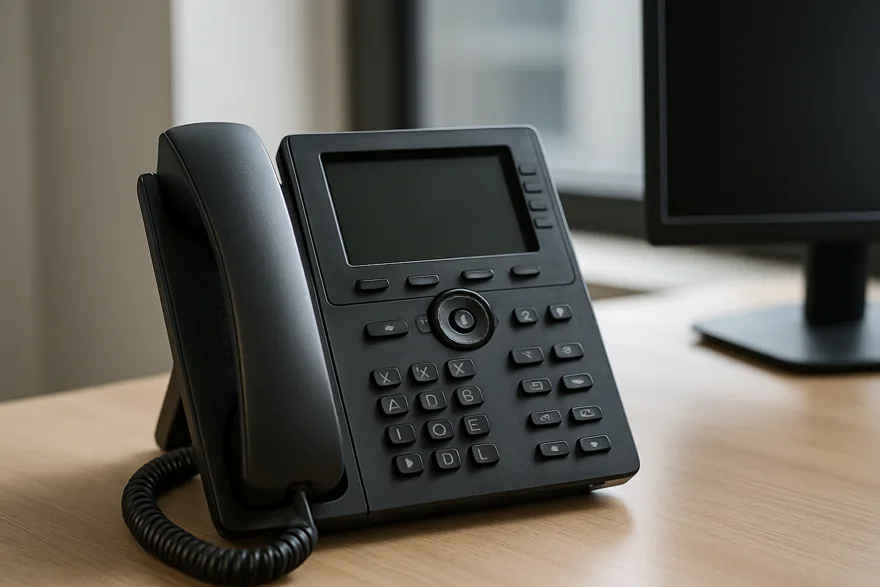
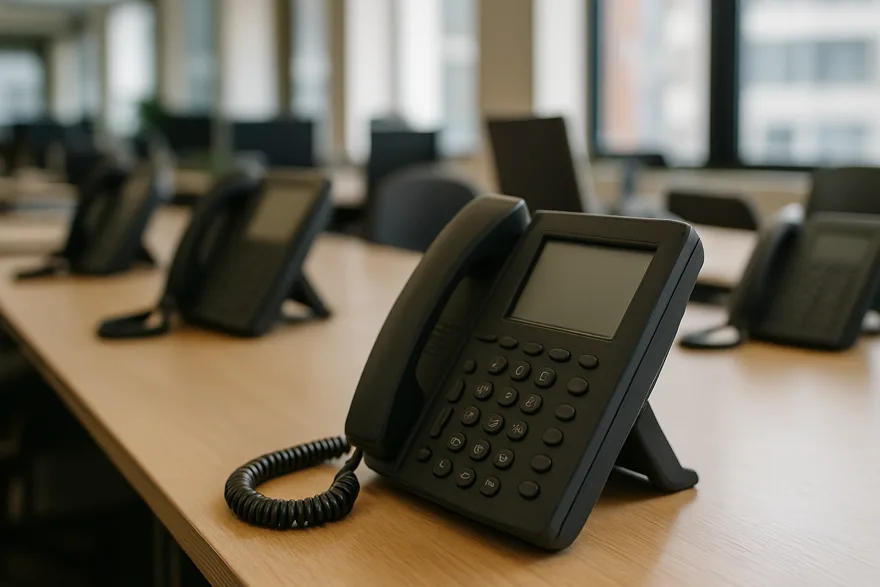


The 2026 numbers
| Phone system category | 2026 published range | The number that actually matters |
|---|---|---|
| Cloud VoIP seat (entry tier) | $15-$30/user/month | Annual billing runs 20-50% cheaper than monthly for the same tier |
| Cloud VoIP seat (mid tier) | $25-$50/user/month | Compare the all-in total with taxes and fees - commonly 20-30% on top |
| Contract term | 12-36 months typical (up to 84) | Miss the 30-90 day notice window and many contracts renew a full term |
| Taxes and fees on the bill | commonly 20-30% of the total | Federal USF (38.8% of interstate charges, Q3 2026) and state 911 fees are government-set; 'recovery' fees are carrier-invented |
| SIP trunking (keep your PBX) | $15-$30/channel/month | Priced per concurrent call, not per user - fits businesses keeping a PBX |
| Desk phones and wiring | $55-$280/phone; $125-$400/cabling drop | 'No upfront cost' plans still need handsets, drops and a PoE switch |
| Legacy analog lines (elevator, fire alarm, fax) | $30-$60/line/month cellular adapter | Copper holdout pricing runs $150-$500+/line - and standard VoIP fails those inspections |
Put a phone system quote out to competing bid before talking price
Two free marketplace paths: one form brings back multiple vetted providers who know they are competing for the job. Competing quotes are the only pricing discipline this industry consistently respects.
External links go to the marketplaces' own sites and forms. This site may earn a referral fee at no cost to you - it never changes the data above, and no individual provider pays to appear in our research.
Cloud or on-premise - the headcount answer
On-premise PBX hardware runs roughly $500-$2,000 per user upfront plus 15-20% of hardware cost in annual maintenance; cloud runs per-seat monthly with no capital outlay. Published comparisons consistently favor cloud under about 50 seats on five-year totals - on-premise approaches break-even mainly for large, stable deployments with in-house IT that keep hardware seven-plus years.
SIP trunking - the other meter
SIP trunking prices per concurrent call channel - $15-$30 a month for unlimited plans - not per user, and it exists for exactly one buyer: the business that owns a PBX worth keeping. Ready to retire the hardware? Per-user cloud seats usually price out simpler.

What this means in Galt
What costs Galt businesses the most is rarely the seat price - it is the 20-30% in taxes and fees stacked on top, and the contract terms that keep billing after the price negotiation is forgotten.
This page is independent research, not legal, tax or purchasing advice. Fee schedules, 911 surcharges and telecom rules are set by federal and state authorities and by individual contracts, and they change - verify current rates with your state and the full fee schedule with any provider before signing.
Common questions
Why do phone system quotes differ so much between vendors?
Because quotes price the buyer, not just the seats: tier packaging, contract length, hardware bundles and how informed you seem all move the number - and the fee schedule under the quote varies by provider. That is the structural argument for marketplace-style shopping: one request, several providers who know they are competing, and the spread between quotes becomes your negotiating room.
How much does a business phone system cost per user?
In 2026 vendor list prices, entry tiers run about $15-$30 per user per month, mid tiers $25-$50, and top or enterprise tiers $50-$155 - with annual billing consistently 20-50% cheaper than month-to-month for the same tier. These are directional list-price ranges, not quotes: the real comparison adds taxes and fees, which commonly run another 20-30% of the bill.
What do Kari's Law and RAY BAUM's Act require?
Since 2020, multi-line phone systems - the kind offices, hotels and campuses use - must let anyone dial 911 directly with no prefix (no dialing 9 first), must notify a front desk or security office when a 911 call is placed, and must send a 'dispatchable location' - street address plus floor, suite or room - to emergency dispatchers automatically. Compliance guides commonly cite penalties reaching five figures; the substantive obligations come straight from the FCC's own order.
What is SIP trunking and when does it make sense?
SIP trunking replaces the copper lines feeding a phone system you already own - priced per concurrent call channel, commonly $15-$30 per channel monthly for unlimited plans - rather than per user. The decision line is your existing hardware: if you own a PBX worth keeping, SIP trunking preserves that investment; if you are ready to retire it, per-user cloud seats usually price out simpler and include the features separately billed elsewhere.
What happens to my fax, elevator and fire alarm lines?
They are the catch in the copper shutdown: elevator emergency phones must meet ASME A17.1 and fire alarm dialers must meet NFPA 72, and standard VoIP satisfies neither - an office can migrate every desk phone and still fail inspection. The current fix is a certified cellular POTS-replacement adapter at roughly $30-$60 per line monthly, versus legacy copper holdout pricing that has climbed to $150-$500+ per line in many areas.
Put a phone system quote out to competing bid before talking price
Two free marketplace paths: one form brings back multiple vetted providers who know they are competing for the job. Competing quotes are the only pricing discipline this industry consistently respects.
External links go to the marketplaces' own sites and forms. This site may earn a referral fee at no cost to you - it never changes the data above, and no individual provider pays to appear in our research.
Prices in nearby cities
Garden City · Gasconade · Gentry · Gerald · Gerster · Gibbs · Gideon · Gilliam · Gilman City · Ginger Blue · Gladstone · Glasgow