What business phones really cost in Irwindale - and which bill lines are invented
Business phone service in Irwindale, CA is quoted per user and billed per surprise: the seat price is public, the fees and the renewal clause are not. This page carries the verified 2026 ranges, California's 911 surcharge, and which bill lines are government-mandated versus carrier-invented.
Two free marketplace paths: one form brings back multiple vetted providers who know they are competing for the job.
Business VoIP seats quoted to Irwindale offices run $15-$30 per user per month at entry tier and $25-$50 at mid tier in 2026 vendor list prices - with annual billing 20-50% cheaper than month-to-month for the same seat.
Taxes and fees commonly add 20-30% to a Irwindale business phone bill - and only some lines are government-set: the federal USF runs 38.8% of interstate charges in Q3 2026, while 'regulatory recovery' fees are invented and kept by the carrier.
Most phone contracts offered in Irwindale run 12-36 months with an automatic-renewal clause: miss the written-notice window, commonly 30-90 days before term end, and many contracts renew for another full term.
Every provider on the market runs on the same physics: annual billing beats monthly by 20-50%, contracts auto-renew if you let them, and competing quotes are the only pricing discipline that consistently works.
Business phones are sold on the seat price and paid for in the fine print - which means the buyer who reads the fee schedule and the renewal clause pays a different total than the buyer who compares headline prices alone.
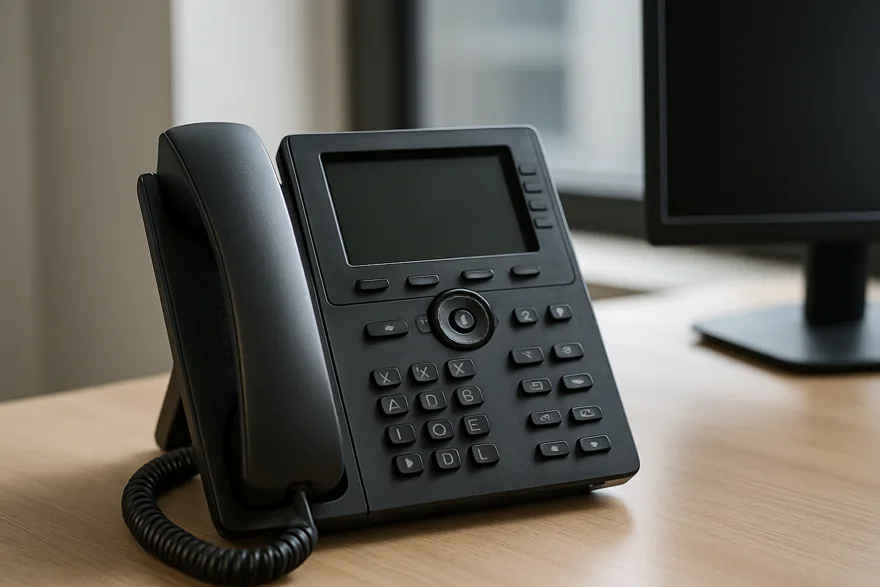
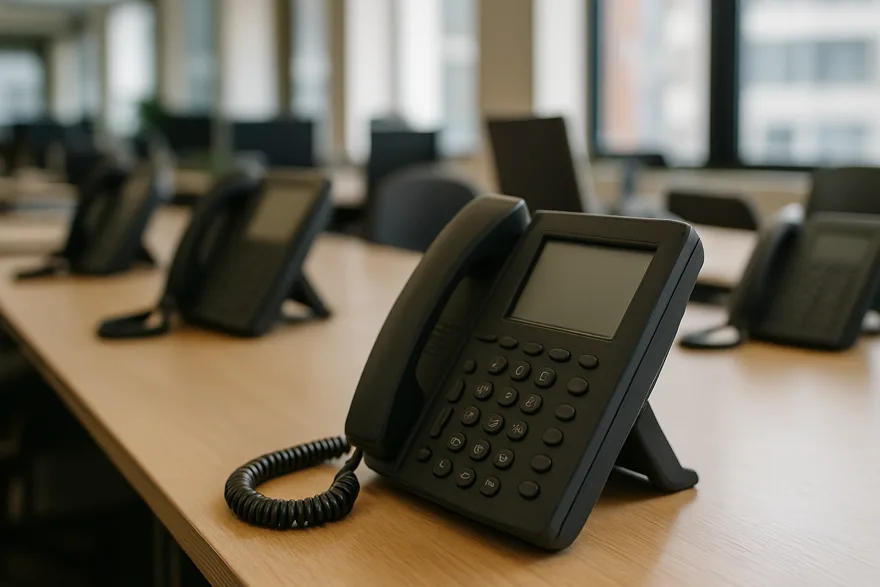

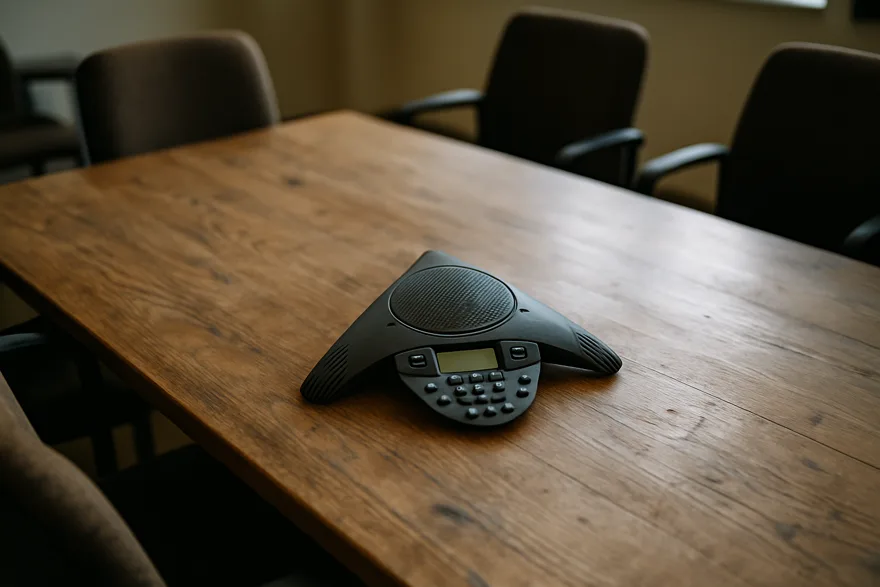
Every category, priced (2026)
| Phone system category | 2026 published range | The number that actually matters |
|---|---|---|
| Cloud VoIP seat (entry tier) | $15-$30/user/month | Annual billing runs 20-50% cheaper than monthly for the same tier |
| Cloud VoIP seat (mid tier) | $25-$50/user/month | Compare the all-in total with taxes and fees - commonly 20-30% on top |
| Contract term | 12-36 months typical (up to 84) | Miss the 30-90 day notice window and many contracts renew a full term |
| Taxes and fees on the bill | commonly 20-30% of the total | Federal USF (38.8% of interstate charges, Q3 2026) and state 911 fees are government-set; 'recovery' fees are carrier-invented |
| SIP trunking (keep your PBX) | $15-$30/channel/month | Priced per concurrent call, not per user - fits businesses keeping a PBX |
| Desk phones and wiring | $55-$280/phone; $125-$400/cabling drop | 'No upfront cost' plans still need handsets, drops and a PoE switch |
| Legacy analog lines (elevator, fire alarm, fax) | $30-$60/line/month cellular adapter | Copper holdout pricing runs $150-$500+/line - and standard VoIP fails those inspections |
Get competing phone system quotes - it is the whole negotiation
Two free marketplace paths: one form brings back multiple vetted providers who know they are competing for the job. Competing quotes are the only pricing discipline this industry consistently respects.
External links go to the marketplaces' own sites and forms. This site may earn a referral fee at no cost to you - it never changes the data above, and no individual provider pays to appear in our research.
What a fair phone deal includes - and what the padded version sells
A fair deal includes
- The all-in monthly total per user with taxes and fees estimated
- A fee schedule that separates government-mandated from company-set lines
- Renewal clause with a notice window you can actually track
- Annual and monthly billing priced side by side
- A price that survives a competing quote
Red flags in a proposal
- Seat-price-only quotes that wave at 'plus taxes and fees'
- Full-term auto-renewal behind a 30-day notice window
- ETFs equal to every remaining month at full price
- 'Free' hardware repayable in the fine print
- Sign-today pressure before your other quotes arrive
What California adds to a phone bill
| Question | California answer |
|---|---|
| State 911 surcharge (business lines) | $0.41/access line/mo for calendar year 2026 (unchanged from 2025) (per access line -- applies uniformly to wireline, wireless, VoIP, and MLTS (MLTS billed on access-line-equivalent reporting)) - Set annually by the California Dept. of Tax and Fee Administration (CDTFA) as the 'Emergency Telephone Users Surcharge,' confirmed by CDTFA's official 2026 rate letter. |
| How the state treats VoIP providers | changed in 2025 -- CPUC now requires VoIP providers to register/certify, reversing California's older hands-off stance - Under a CPUC decision with a compliance deadline of May 11, 2025: facilities-based fixed VoIP providers must obtain a Certificate of Public Convenience and Necessity. |
California is the outlier in this batch bucking the national VoIP-deregulation trend -- since the 2025 CPUC decision, VoIP providers actually need CPUC registration/certification to legally operate in-state, unlike AL/AZ/CO/DE/FL which have all statutorily stripped their commissions of VoIP jurisdiction.
This page is independent research, not legal, tax or purchasing advice. Fee schedules, 911 surcharges and telecom rules are set by federal and state authorities and by individual contracts, and they change - verify current rates with your state and the full fee schedule with any provider before signing.
Why only these two paths
The most expensive line in a phone contract is the one that renews itself: miss the written-notice window - commonly 30-90 days before term end - and many contracts renew for another full term, early-termination fee and all.
Hard bar, verifiable by anyone: free to the buyer, and structurally multi-vendor - one request produces several competing quotes, which is the check against over-quoting that no single provider relationship provides. Marketplaces that charge buyers or route to a single seller are not listed - and any listed path that drops below the bar gets removed.
| Path | What it is | Why it made the bar |
|---|---|---|
| BuyerZone | B2B quote marketplace (business phone systems and other business categories) | One form, multiple vetted sellers respond with competing quotes - free to buyers |
| 360Connect | B2B quote marketplace with local service-area matching | Matches up to five suppliers per request, 100% free to buyers |
Before signing any phone contract
- The full monthly total per user with all taxes and fees estimated - not the bare seat price
- The contract term, the renewal clause, and the written-notice window - in days, in writing
- Which bill lines are government-mandated and which are the provider's own recovery fees
- Annual versus monthly billing priced side by side - the gap commonly runs 20-50%
- Any analog lines in the building - elevator, fire alarm, fax - and their migration plan
The Irwindale decision path
What costs Irwindale businesses the most is rarely the seat price - it is the 20-30% in taxes and fees stacked on top, and the contract terms that keep billing after the price negotiation is forgotten.
This page is independent research, not legal, tax or purchasing advice. Fee schedules, 911 surcharges and telecom rules are set by federal and state authorities and by individual contracts, and they change - verify current rates with your state and the full fee schedule with any provider before signing.
Common questions
Is the 'Regulatory Recovery Fee' a government fee?
No. Despite the official-sounding name, regulatory recovery and administrative recovery fees are set by the carrier, changeable by the carrier, and kept by the carrier - no law requires them or fixes their amount. The genuinely mandated lines are the federal USF contribution and state-imposed charges like your state's 911 surcharge. Ask any provider to split its fee schedule into 'government-mandated' and 'company-set' columns - the honest ones will.
What do Kari's Law and RAY BAUM's Act require?
Since 2020, multi-line phone systems - the kind offices, hotels and campuses use - must let anyone dial 911 directly with no prefix (no dialing 9 first), must notify a front desk or security office when a 911 call is placed, and must send a 'dispatchable location' - street address plus floor, suite or room - to emergency dispatchers automatically. Compliance guides commonly cite penalties reaching five figures; the substantive obligations come straight from the FCC's own order.
How much does a business phone system cost per user?
In 2026 vendor list prices, entry tiers run about $15-$30 per user per month, mid tiers $25-$50, and top or enterprise tiers $50-$155 - with annual billing consistently 20-50% cheaper than month-to-month for the same tier. These are directional list-price ranges, not quotes: the real comparison adds taxes and fees, which commonly run another 20-30% of the bill.
How much internet bandwidth does VoIP need?
About 100 Kbps per simultaneous call - so ten concurrent calls need roughly 1 Mbps each way plus 20-30% headroom, a fraction of any modern business broadband plan. For most offices this is a non-issue; it matters mainly for call-center-scale concurrency or offices still on legacy DSL-class connections. Enabling QoS on the router, which prioritizes voice packets, costs nothing and prevents choppy calls on busy networks.
Are the '99.999% uptime' claims real?
They are contractual targets, not audited history. The math: 99.999% allows 5.26 minutes of downtime a year, while 99.9% allows 8.76 hours - and independent status-tracking services document real incidents at every major provider. The practical risk is usually closer to home anyway: a local internet or power outage takes cloud phones down regardless of the provider's data centers, unless you configure cellular failover or call-forwarding in advance.
Should I choose cloud VoIP or an on-premise PBX?
For most businesses under about 50 seats, published comparisons consistently favor cloud on five-year total cost: on-premise PBX hardware runs roughly $500-$2,000 per user upfront plus 15-20% of hardware cost in annual maintenance, while cloud runs $15-$90 per user monthly with no capital outlay. On-premise approaches break-even mainly for large, stable deployments that keep hardware seven-plus years and already employ IT staff.
Get competing phone system quotes - it is the whole negotiation
Two free marketplace paths: one form brings back multiple vetted providers who know they are competing for the job. Competing quotes are the only pricing discipline this industry consistently respects.
External links go to the marketplaces' own sites and forms. This site may earn a referral fee at no cost to you - it never changes the data above, and no individual provider pays to appear in our research.
Prices in nearby cities
Isleton · Jackson · Jurupa Valley · Kerman · King City · Kingsburg · La Cañada Flintridge · La Habra · La Habra Heights · La Mesa · La Mirada · La Palma